Showing posts with label 2020OntiverosLeslie. Show all posts
Showing posts with label 2020OntiverosLeslie. Show all posts
Thursday, March 12, 2020
Week 10 Post
I remember on the first day of class I felt like I shouldn't have taken the class because I didn't know anything about Chicana artists and I do not consider myself an artist. However, I realized Chicana art is not traditional art and that's what's beautiful about it. Completing the sketchbook has been challenging for me because I get frustrated that my hands do not look right, or I compare them to the drawings my classmates have in their books. I really enjoyed learning how to work with watercolor pencils because first off, I didn't know they existed, but also because I have always wanted to get a watercolor tattoo. In a previous post I explained how important tattoos are for me and I've been afraid to get a watercolor tattoo because of my skin color, but after working on my portrait I've decided I want to get one. I really enjoyed the artists we learned about throughout the quarter as well as our project on our own artist because I was able to learn about more about public art which is what I'm normally drawn to. I've only had to do a blog in one other class, but it wasn't as free as this one was. It was interesting to see when some pictures my classmates would post were too large and it would through the format off. It was like all of our personalities (big or small) mesh onto one computer screen. The only thorn I would have for the class was my views on La Virgen De Guadalupe didn't coincide with what seemed like the majority of the class's views and that limited my participation in discussion which was difficult because I felt like we talked about it almost ever time our class met. However, I really enjoyed learning about different Chicana artists and becoming more confident in my own artwork.

Friday, March 6, 2020
Week 9 Post
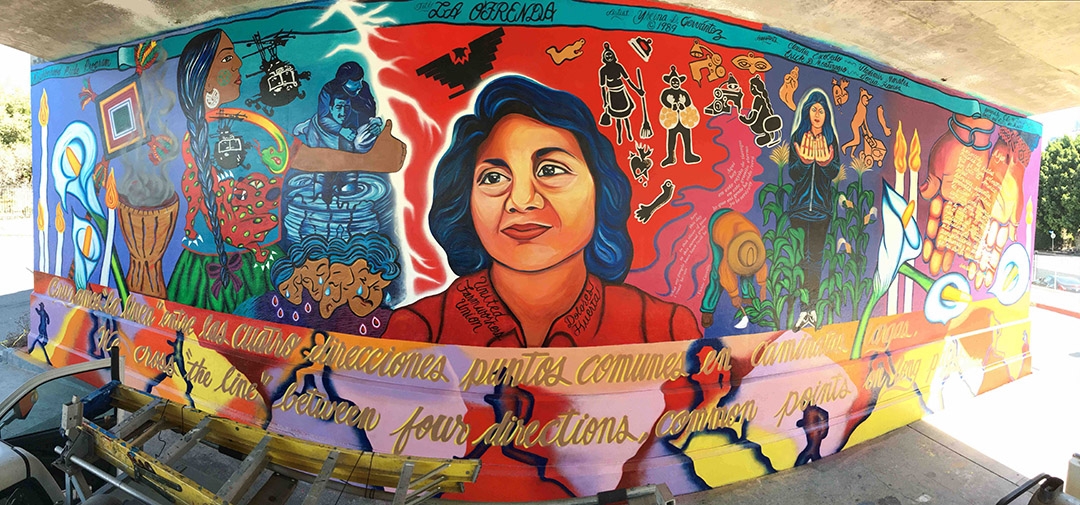
The artist that really stood out to me last week was Yreina Cervantez, especially her mural La Ofrenda. I enjoyed this mural so much because of the contribution to Dolores Huerta and her work with the United Farm Workers movement. Being from the Central Valley and having worked in the fields myself I really appreciate those who were strong enough to fight for the field worker's rights and those who give these powerful members of the union the recognition they deserve. I'm not sure if it's because of the position that the image was taken, but Dolores Huerta seems to be the largest aspect of the mural. Dolores Huerta had such a large contribution in the United Farm Workers movement, she realized how important the movement was and didn't let machismo leadership interfere with her power, although there were many times when others weren’t allowing her to take her place. She would be away from her family for long periods of time because of her position in the movement, and that is very nontraditional for a hispanic female/mother. She even received a lot of backlash for it because society was targeting her for not sticking to “her role as a women/mother” but she didn’t let that bother her and she knew what she was doing in the movement was more important than other people’s opinions on her. There’s also an image of a fieldworker who is pulling crops out of the ground and encouraging it’s growth. The mural's bright colors show strength and long lasting power and there are many aspects of it that I can relate to because of my cultural background like the candles that may represent religion and faith.
Tuesday, February 25, 2020
Week 8 Post
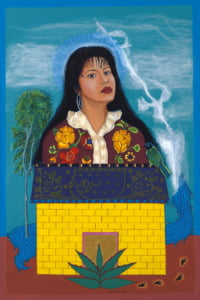
The art piece that really stood out to me from last week's presentation was the piece Selena by Santa Barraza. The first thing that caught my attention was the angelic halo around her image. I believe Santa Barraza was depicting Selena as a prominent female figure the way La Virgen is in hispanic culture. Selena was a very loved Mexican American artist and well known for her music. In this image, Selena seems to be emerging from the ocean which gives a majestic vibe. She has beautiful plants and flowers on her blouse and that is symbolic to Mother Nature. There's also a hummingbird that is feeding from the plants on the blouse which also gives her a nurturing image. I believed this image was tailored more to religion because of the footprints in the right corner of the image reflects the Footprints in the Sand poem. I wasn't sure if Santa Barraza intended for the image to have a religious connotation but because I myself am religious I might have looked out for it. Regardless it is a beautiful depiction of Selena.
Friday, February 21, 2020
Leticia Huerta
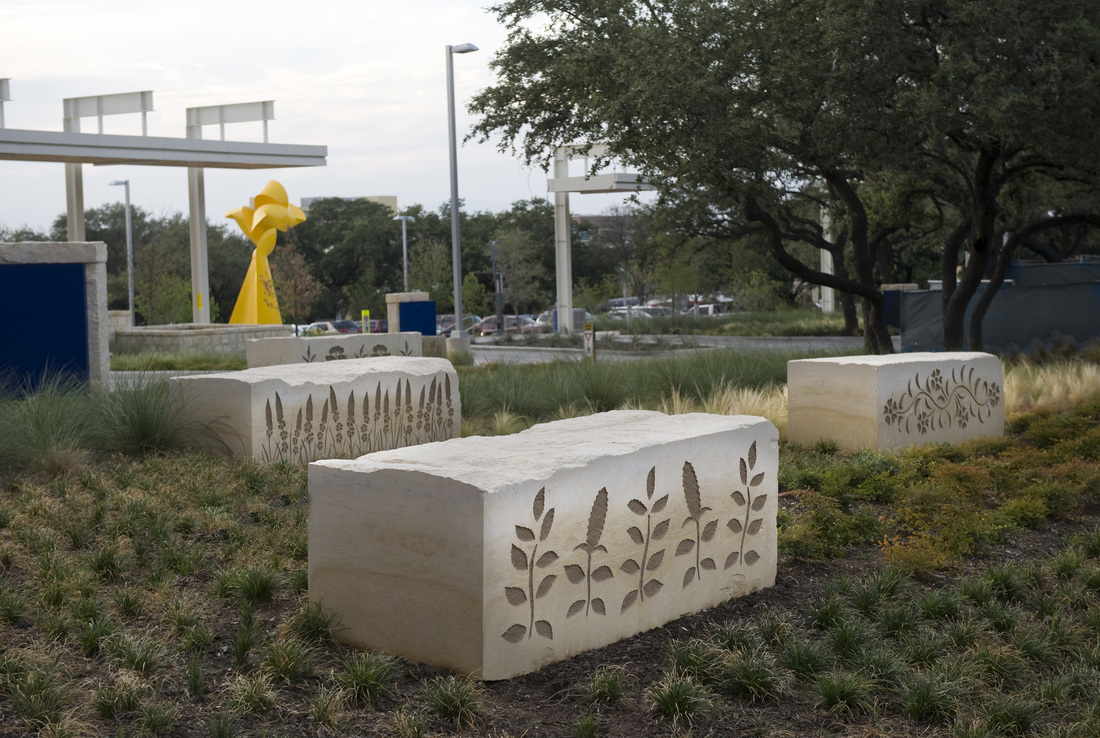
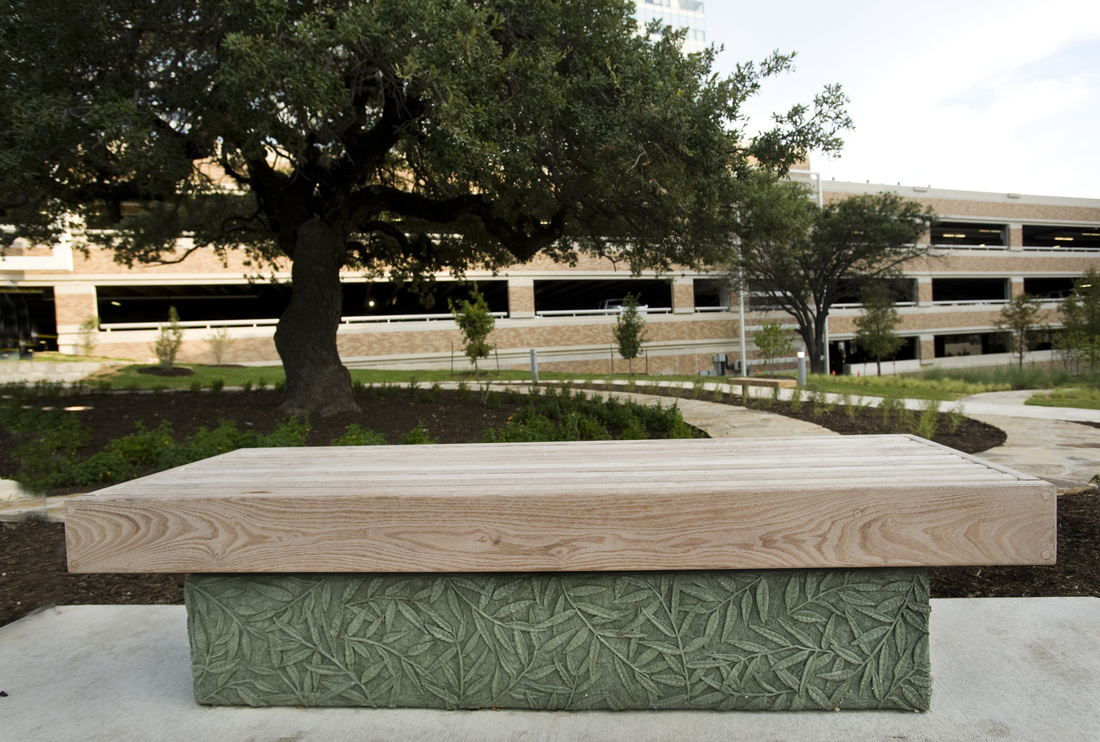
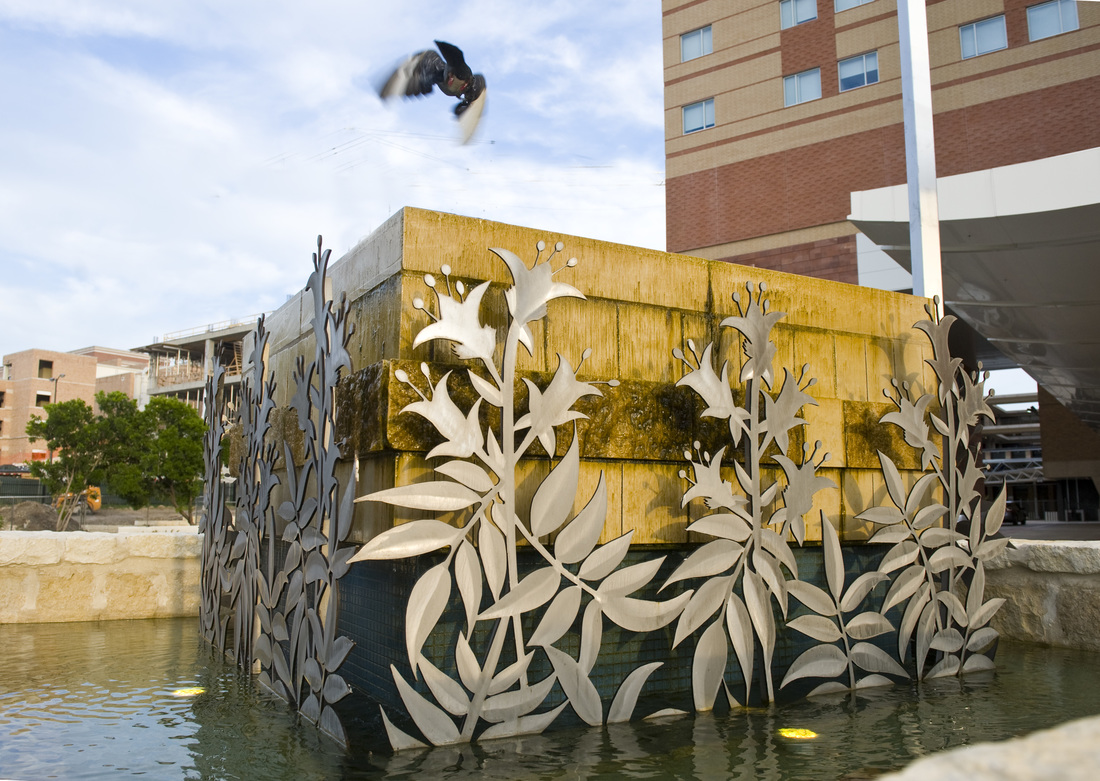
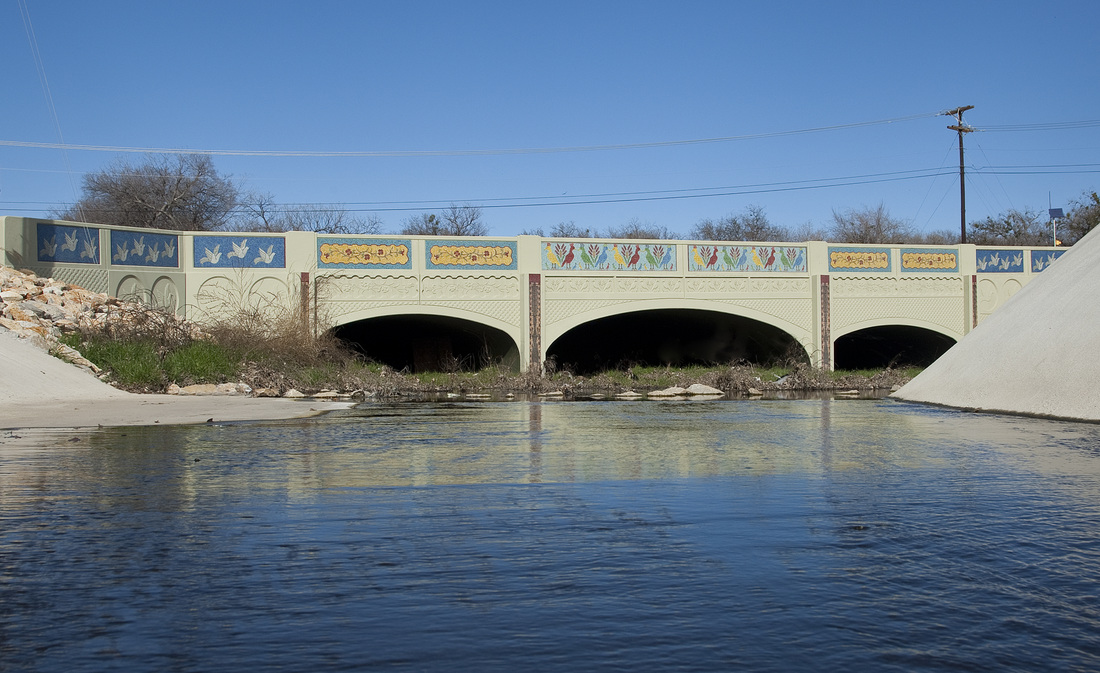
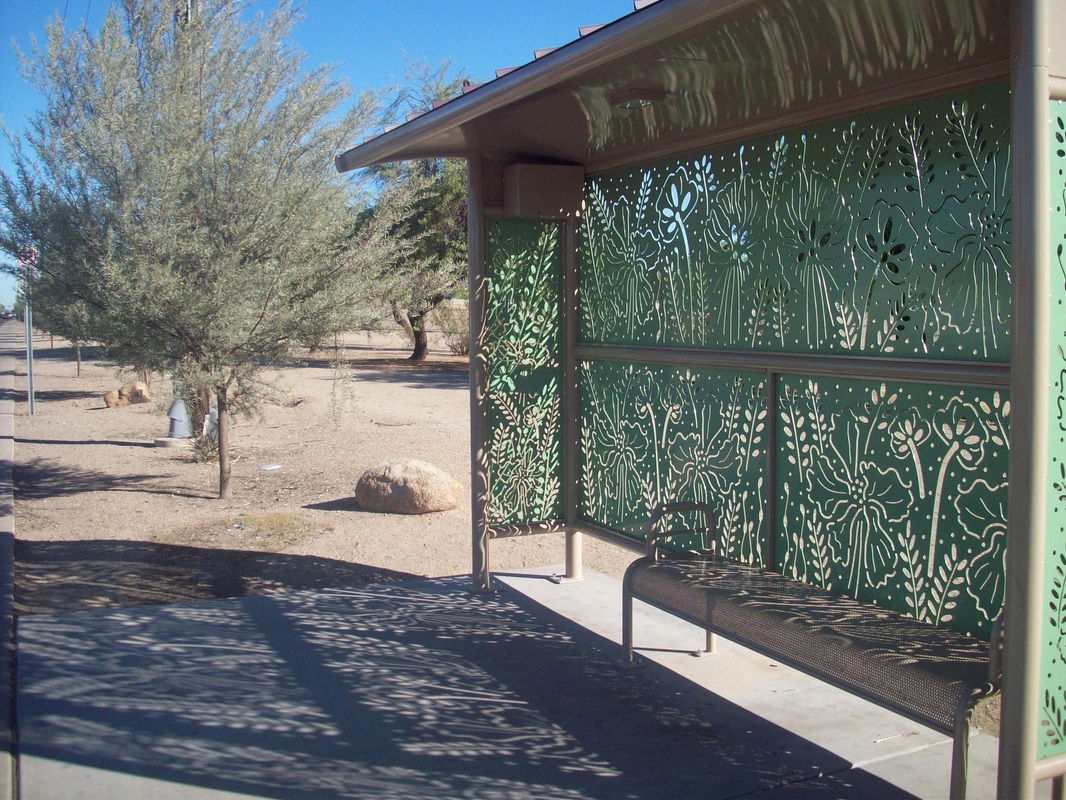
The artist I chose to present on is Leticia Huerta. Her name caught my attention because my grandmother's last name is Huerta and she refused to change it to my grandpa's last name and I always thought that was very powerful, so before I even knew what her art was I knew I wanted to present on her. Leticia Huerta was born in Texas and she graduated with a masters in painting at the Southern Methodist University. She has art in Houston, San Antonio, and Phoenix. She specializes in public art and tailors the art to the community that she's doing it for. Some of her work includes bridges, parks, public buildings, and transportation areas like bus stops. She uses tile, glass, metal, and concrete to create her artwork. I have always appreciated public art because I spend a lot of time commuting and I've always been intrigued by the detail and the skill in making art with nontraditional items. One of her projects that I really enjoyed was the University Hospital Trauma Center Project in San Antonio, Texas, it includes stained walkways, a healing garden and different sculptures that leads into the new trauma center. The reason why I enjoyed this so much was because it reminded me of peace and families of patients need a safe space to think while they are there. Her art around public transportation is inspired by local history.
Thursday, February 20, 2020
Monday, February 17, 2020
Stencil
The stencil I chose is a tattoo gun. Growing up I loved seeing tattoo work on my family and I couldn't wait until I was able to get one of my own. I begged my mother to let me get one before I was 18 but she wouldn't budge. Finally, three months after turning 18, and getting approval from her and the rest of my family I was able to get my first tattoo. I was extremely excited when I got on that cold chair and saw the stencil of my tattoo drying on my body. My tattoo artist was a scary looking guy and my family did not prepare me for the amount of pain that that little needle was going to cause. The vibration of the needle was music to my ears, I felt my body wanting to shiver, but I was afraid of moving and potentially ruining the artwork. I was extremely nervous and very uncomfortable. I felt like the needle wasn't moving in a pattern, it felt like it was just going deeper and deeper into my skin. When I had to get up to use the bathroom my ribs were sore, even breathing hurt. I did not want to go back to that chair, the chair that I was tortured on for two hours already. My mother was sitting there patiently, ready to scold me if I stopped the session right there. I dragged my feet back and sat on that chair for another two hours and got through the night. I was crying at the end of it but everyone was very proud of me, and I was very confused about how I was feeling, I was just praised for getting through pain? I loved my tattoo, there was so much detail and I couldn't believe a needle was able to do that. And I couldn't believe my tattoo Artist was able to do that because when you think of art his image isn't the first thing that pops in your head, but now I know art has no image. It was truly an amazing experience and that's why I now have five.

Monday, February 10, 2020
Week 5 Post
When I saw this image, I immediately thought of an important time in my childhood. My grandpa has worked in the melon fields his whole life and I would get really excited when he would get off work and ask me to grab the melons that he would bring back for my grandma. I remember grabbing the melons very carefully and then I would watch my grandma cut the melon. I thought my grandma was so strong because she was able to cut that melon into pieces in no time. She had to wrestle with the melon for that initial cut, but once I could hear the pressure being released, I knew my grandma had victory. She explained different ways to cut it and served it differently each time. Sometimes it would just be sliced, other times it would be chopped into little pieces and mixed in with other fruit, and sometimes she would cut the rind off and sprinkle chili powder on it. My grandma still creates magic in the kitchen, and I still think its amazing that she can make many dishes out of what she has. When I first learned how to cut watermelon I accidentally cut it wrong and I was embarrassed to show my grandma. When she saw she told me I cut out watermelon popsicles and I was very proud and showed the rest of my family, who also went along with it for my sake. Produce is almost sacred for my family because we are all farmworkers, we need produce to survive financially. I appreciated the painting because it brought back those happy memories in ways that others wouldn't understand and might say is insignificant, but Carmen Lomas Garza art is able to capture those moments beautifully.


Sunday, February 9, 2020
Week 4 post
When I took Chicanx studies 188 with Profe Frias she explain rasquache art as being able to make do with what you have. We learned about the different ACTOS that were put on with the UFW movement and how they used anything they could to make their costume, even a cardboard sign with their characters name on it. So I was very surprised when I read that it was an "attitude or taste" because I was convinced it was a style. Although it is considered resourceful the message is still carried through the art. I don't understand how it is related to people, in particular the working-class people. I don't think being classified as resourceful is a bad thing and I don't really understand why it is given a negative connotation. I also think that the reason why I don't see it as negative it because my family is like this, we are from the Central Valley, meaning we are farmers. We do have coffee pots as flower pots and we do keep every scrap of metal we can find to make different chicken coops with. I was always very fascinated how quick my family was to create new things, useful things out of what others might see as trash.
I really appreciated reading the Chicana Domesticana section because it explains how chicanas struggle to be in between this feminist role and not falling into a domestic role. Chicanas use rasquache art as a tool to affirm domestic life and resist the subjugation of women in that domestic role. (95) It is difficult for women to find that grey area that allows them to be both. I find it very interesting that Chicanas use rasquache art to show "dilemmas of migration, dislocation, and the impermanence of community celebrations." (95)
I really appreciated reading the Chicana Domesticana section because it explains how chicanas struggle to be in between this feminist role and not falling into a domestic role. Chicanas use rasquache art as a tool to affirm domestic life and resist the subjugation of women in that domestic role. (95) It is difficult for women to find that grey area that allows them to be both. I find it very interesting that Chicanas use rasquache art to show "dilemmas of migration, dislocation, and the impermanence of community celebrations." (95)
Thursday, January 30, 2020
Week 2 CARA
After reading, Chapter 3, Out of the House, the Halo, and the Whore's Mask: The Mirror of Malinchismo, I was shocked when I learned the reason why young hispanic women were encouraged to go to college was to find an Anglo and marry him or marry an educated Chicano, not for an actual education. Hispanic women really can't catch a break, and they have to deal with double standards. Women are really only credited with having babies and taking care of their families/husband. This idea of sending a hispanic girl into the higher education system supports this. The text explained that young hispanic women "are excluded from the best setting for catching a promising young Chicano" I would like to think that parents don't think this way today, I understand wanting your child to end up with someone who is educated, but I don't want to believe that is the reason why hispanic parents are encouraging their daughters to go to school.
It is upsetting that women were not depicted or recognized as much as men were in the CARA exhibit, especially in pieces related to the Chicano movement. The author points out that women in the Chicano Civil Rights Movement "could provide nourishment, comfort, and sexual release for the men and future revolutionaries and workers for la Cause." It makes sense that women were treated and viewed this way because our culture itself gives that role to women, unfortunately.
My question is: As powerful as art is in expressing the oppressions hispanic women face, how can it reach the greater Hispanic population if these artists aren't recognized? How can they be recognized?
It is upsetting that women were not depicted or recognized as much as men were in the CARA exhibit, especially in pieces related to the Chicano movement. The author points out that women in the Chicano Civil Rights Movement "could provide nourishment, comfort, and sexual release for the men and future revolutionaries and workers for la Cause." It makes sense that women were treated and viewed this way because our culture itself gives that role to women, unfortunately.
My question is: As powerful as art is in expressing the oppressions hispanic women face, how can it reach the greater Hispanic population if these artists aren't recognized? How can they be recognized?
Thursday, January 23, 2020
Week 3 Post

I am from the central valley and I started working in the fields when I was eleven years old. I had many aunts and uncles who work in the fields and when I first started I never understood why they dressed in so many layers if it was always extremely hot temperatures. It wasn't until I actually went out there and realized that the layers were meant to protect us from the scorching sun and the many pesticides that were sprayed on the crops, not to mention all the little critters and prickly plants that would stick to you. The day was long, we had very few breaks, the water jug was far away, and the one porta-potty that they provided was disgusting and never had any toilet paper or soap. I hated working in the fields, I thought the labor was cruel and the work conditions were unbearable. When I learned about the United Farm Workers movement I couldn't believe that the conditions were worse than how they are now. It upsets me because many of these workers need this work, so they do not complain because of fear of being replaced or other repercussions. This movement is very important to my family because it helped give a voice and made the workers feel more in control in the fields. I find this image interesting because it supports the reality that women were the backbone of the movement even though they aren't recognized for it, especially Dolores Huerta who was extremely dedicated to the movement and helped lead it. I really enjoy how the women are shown as fierce and how Dolores Huerta’s dedication is shown in the background because it proves how her presence will remain with the fieldworkers.
Thursday, January 16, 2020
Leticia Huerta
The artist I chose is Leticia Huerta because she specializes in public art which I have always been intrigued by, especially art on street bridges!
Thursday, January 9, 2020
Ontiveros, Leslie (Leslie)
Hi everyone! My name is Leslie Mariah Ontiveros and I am a third year Chicanx Studies major and Education minor. My preferred pronouns are she/her/hers. I am currently not involved in research, but I was last quarter with Bruin Club! I would go to the University Community School in Koreatown for the after school program with a wonderful team of about eight UCLA students and two researchers, our group of students we worked with were 3rd to 5th graders. We were researching how students interacted with the idea of gender and how gender norms were present in the program. We would have video cameras strapped to our chest/stomach area and the children were completely aware of it. Then we would write field notes about our interactions with the kids and watch the videos and discuss where we saw gender norms and how we could challenge them the next time we met up. It was extremely interesting, because I myself want to be an educator one day and was conflicted on whether or not I wanted to discuss nontraditional topics with my future students. I understand however, that it is completely necessary in order to promote positive healthy change for the future. I enjoyed reading Why Have There Been No Great Women Artists? by Linda Nochlin, because it spoke truth to the fact that art is not free, and greatness is only attributed by institutions that only promote the same social structures that are hurting women. Nochlin explained that women need not dwell in self-pity but must accept their space in those oppressions to drive a positive movement towards equality.


Subscribe to:
Posts (Atom)