Loud and colorful aesthetics tend to be associated with bad taste, especially in the context of mainstream minimalism that was popular in the mid-1900s, the same time that Chicanx art (which is typically loud and colorful) began to flourish. In
Domesticana, Amalia Mesa-Bains characterizes this "tastelessness" as a challenge to the dominant culture and the hierarchies imposed upon aesthetics. This is of course because the categorization of what is "good taste" is decided by those with power. Beyond just kitsch, rasquachismo is taste that reveals resourcefulness, being associated with Chicanx working-class repurposing of objects and reinventing them. It is an interesting aesthetic form, rooted in activism. As is usually the case, the breaking of Chicano hegemonic values is concurrent with Chicana breaking of Chicano patriarchal values. Here, this consciousness is revealed through an engagement with domestic spaces and its typical features.
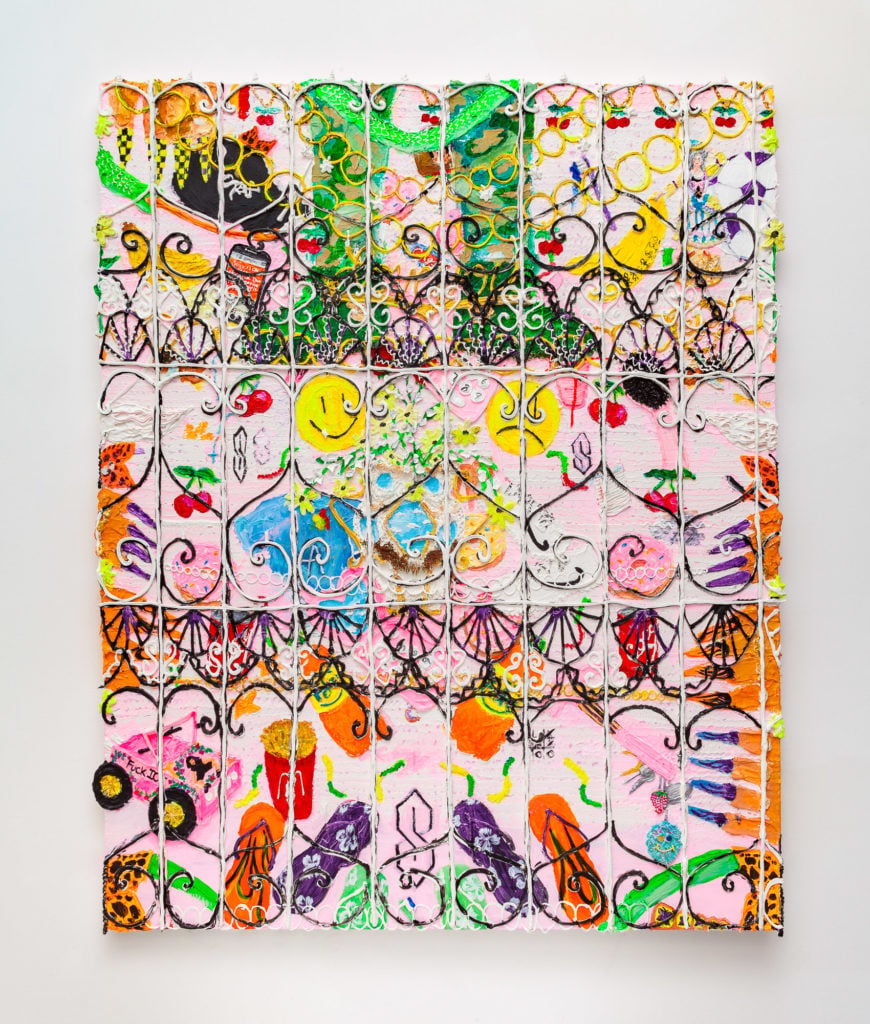
In looking up the etymology of the word rasquachismo, I came upon an article about the work of Mexican-American artist Yvette Mayorga (
https://news.artnet.com/exhibitions/yvette-mayorga-geary-contemporary-1712022). Her artworks make use of recycled objects and references to mass commercial production, culminating in a lavish aesthetic that feels like very dream-like. Her work comments on the US/Mexico border, particularly the experiences of those crossing north and the hopeful fantasies sometimes carried with them. Some of her paintings make use of pieces of wrought-iron fences, creating a physical border between the viewer and the imagery in the painting. I think that the loud, colorful style that recalls rasquache aesthetics functions in reinforcing the idea of a "fantasy."

No comments:
Post a Comment