Showing posts with label 2020NeiraCamille. Show all posts
Showing posts with label 2020NeiraCamille. Show all posts
Thursday, March 12, 2020
Week 10 Reflection
Even though it’s only my second quarter at UCLA, when I signed up for this class I thought it was going to be like the other art history classes I’d taken here already. I knew it was something I wanted to learn about, but the format of this class ended up being far more fulfilling compared to the other art history courses I’ve taken and I feel like really helped me reflect on my own cultural past and how art and culture functions in a far deeper context for me personally and other women. First, learning about Chicana artists and the levels of intersectionality involved in the development of Chicanx aesthetics has given me a much deeper understanding of common iconography and how it all functions together. Also, I was exposed to so many new artists whose work I absolutely loved compared to some of the other art history courses I’ve taken where I haven’t felt this way. One part that I thought really added to this course as well was the sketch books. I think it added a form of learning that allowed us to explore our own lenses and creativity in the same way the artist we were learning about were. I wish there were more classes like this in the art history department and that more heavily involved artists and even the practice of art like this class did because I really feel like it added a deeper level of understanding and embodied knowledge that other courses I’ve taken completely lack.

Wednesday, March 4, 2020
Week Nine Presentations
I really enjoyed learning about the public artists like Judy Baca and all of the amazing photographers from last week's presentations. The photographer that stuck with me the most was Thalia Gochez and her recent taking to photography as a reaction to the election of Donald Trump. She uses film photography to create a true representation of her community. In an interview with Kno Online she said she does not consider herself as an activist but explains, “I’m just learning how to exist and navigate in these institutions that weren’t built for people like me to succeed. I do that by highlighting and holding a safe space to the best of my ability through my art for my friends and people of color in my community.” She creates art for herself and community for their own sense of representation and enjoyment which I admired and reminded me of the photographer I chose to research, Delilah Montoya. She has been interviewed by many art blogs and magazines and even has done projects with Nike. Also, I like the effect that the film has on her photos and the angelic look it often gives the women in the pictures.

Tuesday, February 25, 2020
Week 8: Presentation Reflection
I thought all of the artists that were presented on all had very interesting and powerful messages or perspectives. One of my favorite artists we learned about was Consuelo Jiminez Underwood. I had never seen textile work like that and thought it added a very particular type of dimension. The materials she used for her textiles all were specifically chosen to convey a particular emotion about her subjects and had significance not only visually but conceptually. In addition to the thoughtfulness and importance of her messages, the pieces were also very visually stunning and showed strong craftsmanship.
The other artist I thought was particularly memorable was Natalia Anciso and her pieces about the forced separations at the border and immigration at the border. In the pieces we looked atg, she always drew the subjects of her paintings in black and white with very emotive and powerful realistic emotions shown on the faces. I think her work is very important in showing the pain and destruction caused by border politics and can evoke a common sense of separation anxiety and pain for those who are particularly separated from the issue creating empathy and perhaps more social action.
Thursday, February 20, 2020
Week 7: Delilah Montoya
Born in Texas but ultimately spending her life in Albuquerque, New Mexico, Delilah Montoya became widely known for her photography that helped to identify her own definitions of the Chicano community and become an artist primarily for that community. As she defies normal ways of western visual ethnographic documentation, her photos transcend and challenge traditional forms of representation. For my presentation and paper, I want to look a lot at how she depicts confrontations of power, gender, biculturalism, intersectionality, etc. in her photographs and installations and have chosen three images that I think do so very powerfully.

 One of my favorite of her images/photo mural installation, La Guadalupana, shows an incarcerated man in handcuffs facing away from the camera. The top of his jumpsuit is unbuttoned showing the viewer the large tattoo of La Virgen on his back. Surrounding the main image are other identifying prison tattoos or pintos of La Virgen and a small offerings to the man in the main photo who had been murdered shortly after the photo was taken. The perspective of the camera dismantles the US prison system’s efforts to subordinate and control by opposing traditional mug shot portraits while also submitting the man’s power to the bars around him and the vulnerability of his arrested and exposed body. Simultaneously, the highlighted Virgen pinto on the back of the man defies the masculine brutality and protects him with her empowered feminine energy. Surrounded by thorny roses, protruding spikes, and manifested by painful needling, La Virgen powerfully looms over the sense of masculinity in the setting and reclaims the power to protect her community with her mystic energy.
Thursday, February 13, 2020
Week Six: Stencils
For my stencil, I am attempting to do a small portion of one of my favorite photos of Frida Kahlo. I want to just make a stencil of her hand holding the sugar skull. My love for art history started with my mom showing me Frida Kahlo’s paintings when I was younger and with her later painting me her own version of Sandias or Viva la Vida. Since then, Frida Kahlo has been a very important figure to me and reminds me of the strong women in my life. The affectionate hand on the skull reminds me of the love and strength the women in my family have given me. The skull itself represents connection and consciousness of life.
Around that image I have the words “unbearably light” from one of my favorite books called The Unbearable Lightness of Being by Milan Kundera. This book discusses the issues in dealing with a life that is inherently meaningless. After reading this book, I really began seeing things differently and opened my mind to existentialism as told by authors like Kundera, Albee, Camus, and Sartre. Although thinking in this way often scares me, it reminds me that I have control over the meaning of my own life. Also, existentialist and absurdist authors have written some of my favorite books and plays and often have a very interesting plot. 
Thursday, February 6, 2020
Week 5: Ofelia Esparza
Hearing Ofelia Esparza speak about her story, her cultural upbringing, and her work last week made me really admire her spirituality, her way of seeing the world, and her connections to the past. The way she described the earth, her neighborhood, her ancestors showed her deep connection spiritual transcendence and understanding of everything that made her life hers. In particular, when she was talking about knowing her grandmother but never really actually knowing her made me think of my own grandmother and my great grandfather. Immigrating from Colombia, my grandmother and father had to leave everyone behind to move to the US and being undocumented for the first half of their lives here, they couldn’t go back and visit my great grandfather even at the time of his passing so they only had memories and photos to maintain that connection. They have since passed those memories and stories along to me to the point where I think about him as though I’ve visited him and worry about what he would think even though I’ve only ever seen a few photos of him.
Additionally, the carrying on of old tradition and honoring ancestors reminds me a lot of Carmen Lomas Garza’s work. Not only had Garza created altars but she also used familial scenes and cultural traditions as the subjects of her work so create more representation, understanding, and respect. I particularly liked her use of close ups to convey the deeper often more emotional or spiritual essence of whatever she depicted. I truly admire these women and their deep connections to their ancestors and embodiment of spirituality.
Coming from a mixed ethinic background where my parents are from two completely different types of worlds, I have long struggled in understanding my own cultural identity and how to embody and honor both parts of me because they were equally as important in my upbringing. But, hearing these women talk and reading a lot about how Chicanas navigate their own world of intersectionality has helped me understand and navigate my own cultural world a little better.
Thursday, January 30, 2020
Week 4
The sensibility of rasquachismo, as described by Ybarra-Frausto in Chicano and Chicana Art: A Critical Anthology is a dynamic “visceral response” (85) to biculturalism and struggle coming from a dignified and resourceful mindset. I think rasquachismo as an aesthetic reclaims bends an outsider’s established conceptions of a lower lifestyle to become a sense of reclaimed power and resolved grit to make the most of what is there. Additionally, the improvisational practice combining traditional vernaculars with American mass culture mirrors the intersectionality of a bicultural community’s identity as a whole. Even further, domesticana, the female continuation of rasquachismo, shows a deeper sense of intersectionality. Like we discussed in the first few weeks, a Chicana woman faces not only the same struggles of the Chicano community but the struggle of the dominant patriarchy within the Chicano community. In adding the additional aspect of gender in domesticana, the women artists often sought to reclaim spaces that perpetuated the oppression of the female body like the church, the kitchen, and the bedroom. For example, Amalia Mesa-Bains used traditional altars to honor and elevate strong female figures in the same way the church would male figures and holy bodies. Both are forms of resistance to social norms and attitudes towards an underdog sense of resourcefulness. Although clear that both sensibilities share ideas, domesticana deals with the additional layer of gender. Domesticana serves as a deeper form of rasquache reflecting on the dynamics of a Chicanas’ own identities and roles in the Chicano community.
Wednesday, January 22, 2020
Week 3: Yolanda Lopez
After this week's reading, I have found that Yolanda Lopez's politics on representation and her journey in developing her politics and own identity were very powerful and come across very clearly in her work. One of my favorite pieces of hers was the third of four collaged, mixed media portraits of her grandmother Victoria. The face of her grandmother is drawn with just charcoal or pencil against a plain white background with her body and clothing made up of various images of nature including clouds, trees, and flowers. Her grandmother’s face rests naturalistically as if she was looking into a mirror. We see her as she would see herself. Meanwhile her clothes is representative of everything surrounding us, like she can exist anywhere where there is nature. By combining the simple naturalistic drawing of her face and the collaged body of nature, Lopez created a portrait of an “ordinary” Chicana woman as something as common and as powerful as nature and in a way that the subject would have ordinarily seen herself, not as others would have seen her.
Additionally, coming from San Diego, I did not know a lot of the history of her involvement concerning the creation of Chicano Park, and it was interesting learning more about many of the places I’m regularly at in San Diego. However, it upsets me that still, even in the creation of the historic Chicano Park, many of the murals perpetuate the same patriarchal dominance that we’ve been discussing.
Thursday, January 16, 2020
CARA Reflection
In this week’s reading, de Alba discusses and explains the under representation of Chicana artists in the CARA exhibition. To explain the lack of representation for Chicana artists and the incorrect representation of their art and issues, the author shows how the CARA exhibition perpetuated the continuation of adelita/malinche culture of the Chicano movement.
As de Alba compares, El Movimento is like Animal Farm in that “‘some [...] are more equal than others.’” Chicanos of the movement saw their own equality and nationalism as the end goal leaving behind and ostracizing Chicanas who sought complete equality beyond race and class.
I thought the reclamation of the concept of La Malinche by Chicanas and Chicana lesbians was powerful and compared to the Chicano patriarchy’s use of this term. According to the general patriarchy of Chicanos, La Malinche negatively defies the efforts of Chicano empowerment for her refusal to obediently follow the movement of the males; as a result, they are labeled by under the common grouping of “traitor/sellout/whore.” Out of this Malinchismo was born; the empowerment of a Chicana’s reflection and defiance against macho Chicanismo. The CARA Exhibit failed to correctly and accurately depict Malinchismo and ignored the rage and power of such ideology within the Chicana community.
For de Alba, I’m curious to know how she manifests Malinchismo in her own work. Also, I’m curious to know if there have been more recent exhibitions that have been able to more accurately and correctly represent the work of Chicana artists.
Tuesday, January 14, 2020
Thursday, January 9, 2020
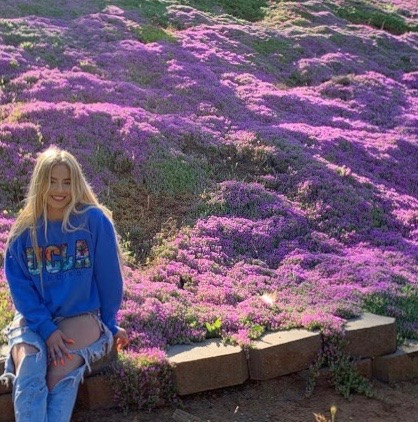
Neira, Camille
Hi, everyone! I'm Camille and prefer the pronouns she/her/hers. I am a freshman marine biology major and am planning on eventually adding a second major in art history. I love both subjects and could not decide between the two, so my plan is to follow through with both and find intersections between them. At the moment, I am not involved in research, but I have been looking forward to finding field work opportunities for marine biology and possibly museum internships for the summer.
For this week’s reading, I really thought “There’s No Place Like Aztlán: Embodied Aesthetics in Chicana Art” was interesting, and the inclusion of different types of place based aesthetics expanded the notion of a place. More specifically, the idea that the Aztlán aesthetic came from a conjured place as a result of displaced origins, colonization, and reclamation. De Alba equates their “place” to the construct of La Virgen, a womb they long to return to, untouched by the rape of westward expansion. This homeland exists in the dichotomy of both a “vanquished” place compared to La Malinche and an untouched place like La Virgen; a place of both loss and potential, the Aztlán is again created within the intercies of a sense of displacement and reclamation. The inclusion of Homi K Bhabha’s sense of identity resulting from the intercies of origin, race, nationality, gender, etc. helped me make sense of this phenomena created by clashes of typical markers of identity within one body. I also loved the work included by Delilah Montoya and the explanation behind it.
Coming from San Diego, I have long been surrounded by Chicano and Chicana art which has significantly contributed to my love of art history and am excited to look in depth at the artists and history involved.
Subscribe to:
Posts (Atom)